Address
Room 910,1B Yuefu Plaza, No.481 Guangming Avenue,Guangming District, Shenzhen, China.

Introduction
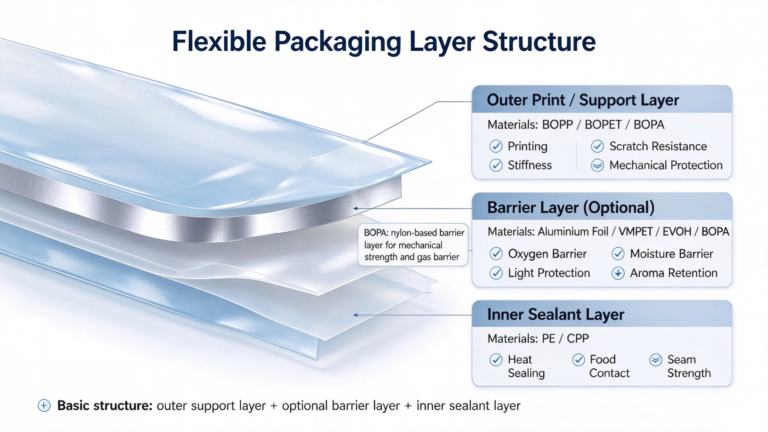
Bubbles, whitening, unstable peel strength, and metal transfer are common defects in flexible packaging lamination. While these problems are often blamed on the adhesive or processing conditions, the film substrate itself may be the real cause.
Some film defects remain hidden during incoming inspection and only become visible after lamination, curing, or storage.
Good lamination starts with good film. Understanding substrate quality is essential for stable production.
1. BOPA (Nylon) Film: Moisture-Related Defects
Nylon film readily absorbs moisture, especially in humid environments. Excessive moisture can cause bubbles, whitening, and unstable peel strength during solvent-free lamination.
Common signs:
- Tiny bubbles appear after curing.
- The laminated interface becomes cloudy or white.
- Peel strength varies between rolls or along the same roll.
Moisture trapped between film layers may react with isocyanate groups in polyurethane adhesives, generating CO₂ and forming microscopic bubbles. Moisture can also interfere with interfacial bonding.
What to check: Film moisture content, storage conditions, and exposure time after opening the packaging. Proper sealing and moisture control can help reduce these risks.
2. PE and CPP Films: Additive Migration
PE and CPP heat-seal films may contain slip agents, antiblocking agents, and other processing additives. Some additives can migrate toward the film surface during storage, heating, or curing, potentially weakening adhesion.
Common signs:
- Whitening or haze develops after curing.
- Peel strength decreases during storage.
- Local delamination or inconsistent heat-seal performance occurs.
These defects may become more noticeable over time rather than immediately after production.
What to check: Compare film batches, monitor peel strength over time, and confirm that the film formulation is suitable for the intended lamination and sealing applications.
3. Metallized PET (VMPET): Metal Transfer
Metal transfer occurs when the thin metal coating separates from the PET base film and transfers to an adjacent layer.
A key point: Metal transfer does not always mean insufficient adhesive strength. The adhesion between the metal coating and the PET film may be too weak.
Possible causes include poor metal-layer adhesion, mechanical damage during handling or slitting, and excessive web tension during lamination.
What to check: Inspect the unlaminated film, conduct an appropriate metal-layer adhesion test, and review web tension and handling conditions. A simple tape test can provide an initial indication of potential problems.
4. PET Film: Surface Energy and Contamination
PET film is widely used in flexible packaging, but surface conditions can vary between batches.
Common issues include:
- Declining surface energy: Corona-treated film may lose surface energy during storage, reducing wettability.
- Material degradation: Hydrolysis under certain conditions may affect PET properties.
- Surface contamination: Dust or processing residues can create weak bonding areas and localized defects.
A film may look clean but still have surface conditions unsuitable for reliable lamination.
What to check: Surface energy, storage history, cleanliness, and consistency between film batches.
5. How to Identify Film-Related Lamination Problems
Before changing process settings, carry out a few simple comparisons:
- Compare film batches. If defects change significantly when the film roll or batch changes, investigate substrate properties.
- Check the defect pattern. Problems limited to certain rolls may indicate material variation, while defects across multiple rolls may point to common process issues.
- Inspect the failure surface. Metal-layer separation, film tearing, or surface contamination can provide clues about the root cause.
- Review film specifications. Check relevant properties such as moisture content, surface energy, additive formulation, and metal-layer adhesion.
No single test can confirm every root cause. Film properties, process conditions, and test results should be evaluated together.
Conclusion: Film Quality Matters
Reliable solvent-free lamination depends on the combined performance of the film substrate, adhesive system, and processing conditions.
- BOPA: Moisture control.
- PE/CPP: Additive migration and surface properties.
- VMPET: Metal-layer adhesion.
- PET: Surface energy and cleanliness.
Selecting the right film and maintaining consistent incoming quality can help reduce lamination defects, material waste, and production downtime.
About Our Flexible Packaging Films
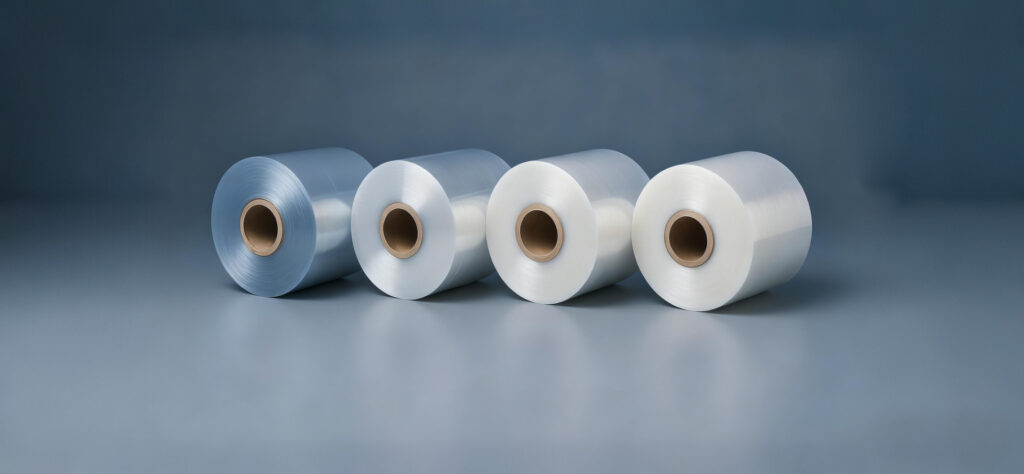
We supply BOPA, CPP, PE, BOPP, and PET films for flexible packaging applications. We aim to help customers select suitable materials for their lamination processes and packaging requirements.
Contact us to discuss your film specifications and application needs.
Note: Actual results depend on film formulation, equipment, processing conditions, and the intended application. Appropriate testing is recommended before commercial production.